
Japandi Lighting: Warm, Not Bare
Create a warmer Japandi room with practical layered lighting, 2700K–3000K bulbs, sculptural shades and room-by-room advice. Avoid common mistakes.

In questo articolo
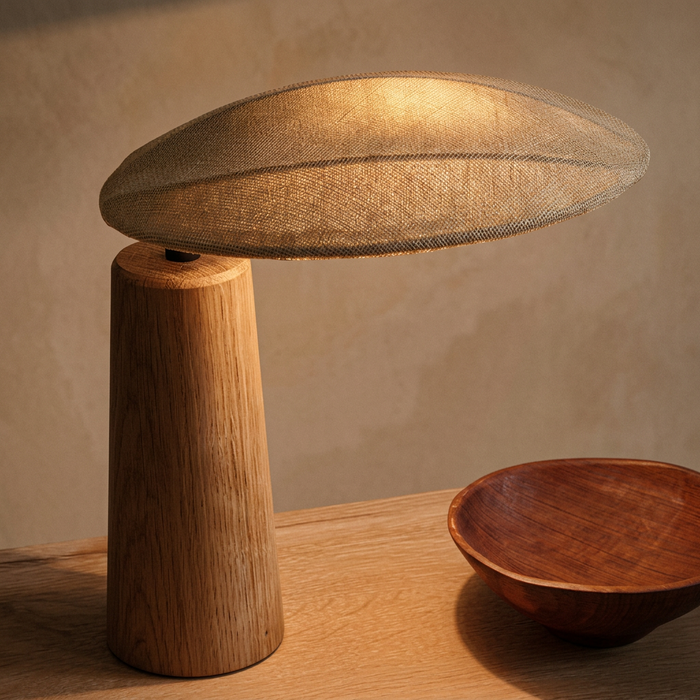
Japandi lighting starts with where light goes—not what color the lampshade is. To make a minimalist home feel warm rather than bare, combine low-glare ambient light, useful task lighting and one quietly sculptural accent. Choose a consistent warm tone and leave enough darkness to create depth without leaving work areas poorly lit.
The three-layer Japandi lighting plan
| Layer | Purpose | Typical choice |
|---|---|---|
| Ambient | General comfort and movement | Shielded ceiling fitting or reflected light |
| Task | Reading, cooking and focused activity | Table light or focused pendant |
| Accent | Depth and atmosphere | Small source on a side table or near a textured wall |
You do not need three newly purchased fixtures. You need three functions. Begin by switching off the harsh central light at night and seeing which corners or tasks need attention.
1. Use warm white light without sacrificing visibility
A color temperature around 2700–3000K is a useful starting range for living and sleeping areas. If available, a source with stated CRI 90+ can help reproduce fabric, wood and food colors more faithfully. A softly illuminated room is not necessarily a dim room: a reading chair still needs enough light for a book. Keep the bare source out of your normal line of sight.
2. Pick one expressive shape
Organic contours can soften boxy furniture. But if the pendant, sofa, side table and vase are all sculptural statements, the room can start to look crowded. Let one object carry the shape; keep other pieces quiet. KUMORI uses a gently irregular white resin shade; QUIETE provides an alternative resin form. Do not describe resin with a stone-like finish as natural stone.

3. Mix wood, fabric and textured finishes carefully
Japandi does not require every shade of wood to match. Light oak, walnut and neutral fabric can look harmonious when their warmth is repeated elsewhere in the room. Avoid conflicting undertones and too many glossy materials. Wood texture, a matte surface and a small amount of contrast usually work harder than buying more decorative objects.

4. Room-by-room lighting ideas
Living room
Place a warm lamp near the seating area and another source across the room to create depth. SELVA's wooden floor-lamp frame and fabric shade can visually balance a low couch. Keep its power cord clear of the walkway. Avoid a single glaring ceiling light over the entire room.
Bedroom
Decide first whether you read, relax or both. When reading, shade shape and the beam reaching the page matter more than minimal styling. Compare NAGI's wider oval shade with TRIA's wooden tripod silhouette. Check the lamp's footprint, bulb and socket or plug type against your bedside table.
Dining area
An organic pendant is most convincing when it is positioned for the people underneath. A typical starting point is the shade bottom about 75–90 cm above the dining table; confirm sightlines and glare while seated. Need a more architectural fixture? STILAS combines a concrete-textured body with wood.
Hallway
Keep the path evenly lit and make sure the fitting does not project into a narrow passage. A decorative pendant is rarely practical where head clearance is limited; use a suitable compact ceiling fixture or controlled wall light instead.

5. The biggest Japandi lighting mistakes
- Confusing beige with serenity: variation in wood grain and material gives a room depth.
- Using one very bright overhead source: layer the light instead.
- Buying a beautiful fixture with a visible bulb: assess glare at eye level.
- Assuming selectable color means dimmable: inspect the variant specifications.
- Mixing too many focal points: let one pendant or floor light dominate.
FAQ
What color light is best for Japandi?
Warm white in the 2700–3000K range is a practical place to start, but task needs and natural daylight may influence the choice.
Can Japandi rooms use dark wood?
Yes. Dark wood provides effective contrast with natural fabric, matte white and softly colored walls when balanced across the room.
Is Japandi the same as wabi-sabi?
No. Japandi is a contemporary blend of Japanese-inspired restraint and Scandinavian practicality; wabi-sabi is a broader Japanese aesthetic sensibility associated with impermanence and imperfection. They can overlap visually but should not be treated as interchangeable.
Choose one practical improvement first
Browse Affordique's Japandi & Wabi-Sabi collection for restrained silhouettes, or go directly to table lamps and floor lamps to solve a specific lighting need. A carefully positioned lamp can change the experience of a room more than several matching accessories.
Editorial guidance: these figures are practical design starting points, not an electrical or building-code specification. Always check the specific product, location requirements and installation instructions. Fixed electrical work should be completed by a qualified installer.
Shop the Story


Affordique Editorial

Discover our lighting
Crafted with artisanal dedication, this piece embodies the essence of Nordic design and wabi-sabi philosophy. Every detail has been conceived to endure, transforming the space with discreet elegance and mindful functionality.
0 comments