
Living Room Looks Flat? Check the Lighting First
A dull living room does not necessarily need new furniture. Learn a five-minute lighting test, three lighting layers and five practical fixes.

In questo articolo
Does your living room feel flat, even though the furniture is beautiful? Before replacing the sofa, look at the light. A room illuminated only by a central ceiling fixture can lack depth when seating areas, walls and textures are not illuminated comfortably. Two well-placed sources can sometimes change the atmosphere without new furniture.
1. The five-minute lighting test
Try this after sunset. Turn on only the main ceiling light. Look at the sofa, coffee table, corners and opposite wall. Is the center bright while other areas seem dark? Does the bare bulb cause glare? Are the textures of cushions or curtains difficult to see?
Next, switch it off and turn on a lamp beside the sofa. If you have another light, position it across the room. Compare the two arrangements. This is a practical way of identifying uneven illumination, not a scientific test of perceived luxury.
2. Three lighting layers, three different jobs
Interior designers often distinguish between ambient lighting for moving around, task lighting for reading or detailed work, and accent lighting to bring attention to objects and surfaces. There is no evidence-based universal 30/40/30 rule: the balance depends on the room and how you use it.
| Layer | Purpose | Example |
|---|---|---|
| Ambient | Movement and conversation | A floor lamp contributing to general visibility |
| Task | Reading and focused activities | A light positioned close to the work area |
| Accent | Textures and focal points | A small lamp or controlled wall light |

3. Five mistakes that make the room feel flat
Mistake 1 — One intense ceiling light
A central fixture can be useful, but rarely serves every activity equally well. Add a lateral light and see whether the room becomes more comfortable. You do not have to stop using your ceiling light; combine sources.
Mistake 2 — Looking directly into the bulb
An exposed bulb can cause glare even when a room remains underlit. Choose a shielded shade and check sightlines from the seat you actually use.
Mistake 3 — All lights at the same height
Light near the ceiling, a lower table lamp and a floor lamp can add depth compared with several fixtures grouped in one spot. They do not all need to be switched on simultaneously.

Mistake 4 — Inconsistent light color
A very cool central light alongside very warm lamps may feel mismatched in a small room. Many people prefer a consistent warm-white family for relaxation, varying the brightness where needed.
Mistake 5 — Choosing entirely from a photograph
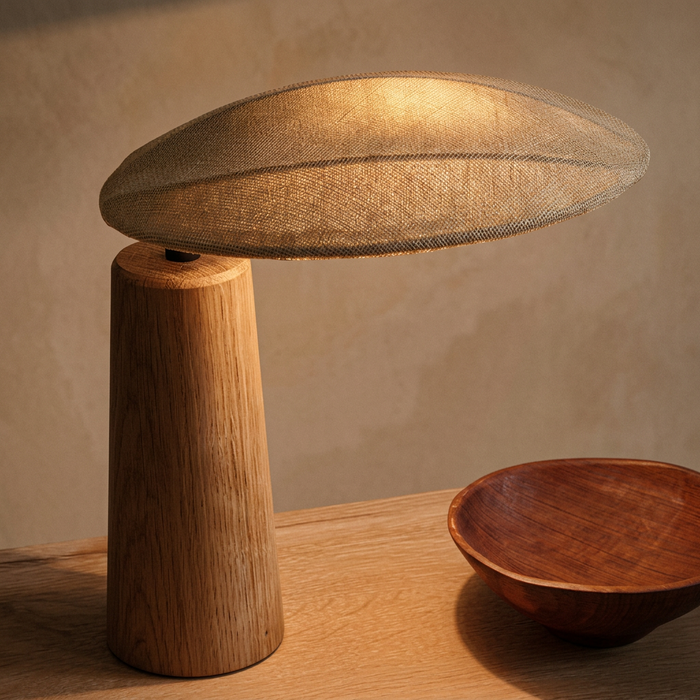
Check dimensions, bulb type, light direction, plug and materials. A sculptural lamp may look wonderful while off but provide too little task illumination. A stone-effect finish should never be mistaken for verified natural stone.
4. Kelvin, lumens and CRI: what matters?
Kelvin (K) describes light color; 2700–3000K is a useful warm-white starting range for a living room. Lumens refer to source output, not necessarily the brightness reaching your sofa. CRI describes color rendering; a stated CRI of 90 or above can help reveal wood and textile colors more faithfully.
Also distinguish between a choice of warm, neutral or cool product variants and a genuinely adjustable fixture. Real dimming depends on compatibility between the fixture, light source and controls.
5. A practical living-room arrangement
Imagine a sofa against one wall and an armchair near the window. Before replacing the sofa, try one comfortable ambient source, a floor lamp by the armchair and a small lamp on the opposite side. Move one of the lights if a corner remains dark before buying more fixtures.
Assess the setup from the seats where you spend time, not only from the doorway. Keep cables off walking paths. Dark walls or larger rooms may require additional light; there is no universal ideal number of lamps.

6. Choose fixtures by what your room needs
If your sofa area lacks light, compare SELVA's fabric-shade floor lamp and RIVA's vintage-style floor lamp. If your general lighting is already adequate but the room lacks depth, NAGI can add a low-level accent. A statement pendant such as SKULPTA can establish a focal point, but it does not replace a considered lighting layout.
Always confirm dimensions and the exact variant before checkout: bulbs, plugs, voltages and available light colors may differ.
Frequently asked questions
Can light really make a living room look more expensive?
Lighting can reveal texture, influence comfort and change how a space is perceived. Aesthetic judgments remain subjective and depend on furnishings and context; there is no universal guarantee.
Warm or cool lighting for the living room?
Many people favor warm white around 2700–3000K for relaxing. More focused tasks may benefit from different conditions. Adequate visibility matters before styling.
Should I stop using the ceiling light?
No. It can work together with floor and table lamps to provide flexibility and control.
Change the light before replacing the furniture
Browse Affordique lighting or read our guides to warm Japandi lighting and pendant hanging heights. Start by solving one clear lighting problem before buying another object.
Editor's note: suggestions are general interior-design guidance. Always check the selected fixture's actual specifications and applicable installation requirements, and use a qualified professional for fixed electrical work.
Shop the Story


Affordique Editorial

Discover our lighting
Crafted with artisanal dedication, this piece embodies the essence of Nordic design and wabi-sabi philosophy. Every detail has been conceived to endure, transforming the space with discreet elegance and mindful functionality.
0 comments